The Loyalty Program Problem Nobody Talks About
You launched a loyalty program expecting more rebookings, stronger relationships, and predictable revenue. Instead, you got a handful of clients gaming the system for discounts and the rest forgetting the program exists entirely. You are not alone. Most spa loyalty programs fail, and it is not because loyalty does not matter. It is because the programs themselves are designed around the wrong incentive. Platforms like SpaSphere approach retention differently--through goal-based treatment plans instead of points.
Research by Frederick Reichheld of Bain & Company, summarized in Harvard Business Review, found that increasing customer retention by 5% can increase profits by 25% to 95%. The problem is not that retention lacks value. The problem is that most loyalty programs are a poor tool for achieving it.
Traditional loyalty programs reward transactions. What retains spa clients is transformation--visible results they can see and feel over time.
Why This Matters for Solo Estheticians
For a solo esthetician, every client relationship is high-value. You do not have hundreds of daily transactions like a coffee shop. You might see 4-6 clients per day. Run the math on one regular: if she books a $120 facial every four weeks, losing her costs you about $1,560 a year in services alone, before retail.
Traditional points-based loyalty systems were designed for retail environments with high transaction volume. A spa is a relationship-driven business with low frequency and high emotional investment. Forcing a retail loyalty model onto a spa business is like wearing someone else's shoes--technically footwear, but it does not fit.
Most spa clients visit a handful of times a year, not every week. That means they earn points slowly, rewards feel distant, and the program never builds momentum. By the time they qualify for a free service, they may have already stopped coming for reasons the program never addressed.
The Five Reasons Loyalty Programs Fail in Spas
1. They Reward Visits, Not Outcomes
A "buy 10 facials, get 1 free" program tells the client to come back ten times before they get anything of value. It says nothing about what those ten visits will accomplish for their skin. The incentive is a discount, not a result.
Compare that to a structured treatment plan where six sessions are designed to clear acne, prep for a wedding, or restore hydration. The client is not counting visits to earn a reward. They are investing in a visible outcome. As we explored in our guide to esthetician treatment plans, outcome-based plans give clients a better reason to return than visit-based incentives.
2. The Rules Are Too Complicated
Points that expire. Tiers that reset. Blackout dates. Exclusions. Every rule you add is a reason for the client to disengage. Most solo estheticians do not have the infrastructure to manage complex loyalty tiers, and most clients do not have the patience to navigate them. If a client cannot explain your loyalty program in one sentence, it is too complicated to drive behavior.
3. Discounts Erode Your Value
Every time you offer a free service as a loyalty reward, you are training clients to wait for the discount instead of valuing the full-price service. For a solo esthetician charging $120 per facial, giving away a free session after ten visits is a $120 loss--roughly 10% of the revenue from that client relationship. That margin matters when you are running a one-person operation.
Worse, discount-driven clients tend to be the least loyal. They follow the deal, not the provider. When a competitor offers a better discount, they leave.
4. Tracking Becomes a Burden
If you are manually tracking points on a punch card or a spreadsheet, mistakes happen. A client disputes their points. Another claims they lost their card. You spend time resolving issues instead of delivering treatments. The administrative overhead of running a loyalty program can actually cost you more time than the program saves in retention.
5. They Do Not Address Why Clients Actually Leave
Clients stop rebooking because they did not see results, they forgot about you between visits, or they did not feel a personal connection. A points system addresses none of these. It assumes the only barrier to retention is insufficient incentive, when the real barriers are experience, follow-up, and outcomes.
For a deeper look at what keeps clients coming back, our guide on building a spa loyalty program that works breaks down the principles that actually drive repeat visits.
What Works Instead: Goal-Based Treatment Plans
The alternative to a loyalty program is not "no program." It is a better program--one designed around the way spa clients actually make decisions.
Goal-based treatment plans replace arbitrary rewards with structured journeys. Instead of "earn points toward a free service," you offer "a 6-session clear skin treatment plan with a defined goal, a set sequence, and a check-in on progress at each visit."
Here is why this works:
- Commitment is built in. The client pays upfront or commits to a series, reducing drop-off.
- Results create loyalty. A client who sees their skin transform does not need a punch card to come back.
- Retention is a byproduct. Each session builds on the last, creating natural momentum to continue.
- Revenue is predictable. A 6-session treatment plan at $130 per session is $780 in committed revenue per client.
SpaSphere's Treatment Plans feature lets you build these structured treatment journeys--defining the session sequence, spacing, and pricing--so clients see a clear path from where they are to where they want to be.
Instead of asking "how do I reward clients for coming back," ask "how do I give clients a reason to come back that has nothing to do with discounts." The answer is always results.
A Practical Example: Replacing Points With Treatment Plans
Imagine you have run a punch card for two years. Clients earn a stamp per visit and get a free $95 enzyme peel after ten stamps. Start by counting how many clients actually finished the card, what those free peels cost you, and whether card holders rebooked any more often than everyone else.
Then replace the card with two or three goal-based treatment plans built around your most common concerns, for example:
- Clear Skin Journey (6 sessions, $750): Targeting acne-prone clients
- Bridal Glow (4 sessions, $520): Pre-wedding skin prep
- Hydration Reset (5 sessions, $600): Dry and dehydrated skin restoration
Planning math helps you see what is at stake. If you enroll five clients in the Clear Skin Journey, that is $3,750 in committed revenue, compared with a free $95 peel given away for every ten visits under the old card. Over the next six months, track three things: how many clients enroll, how many finish their plan, and how many move into a follow-up plan or regular visits.
Common Mistakes When Shifting Away From Loyalty Programs
1. Cutting the Old Program Without Explanation
If clients are currently enrolled in your loyalty program, do not pull it overnight. Honor existing commitments, then communicate the shift. Explain that you are moving toward outcome-based care. Most clients will appreciate the upgrade.
2. Creating Treatment Plans That Are Just Rebranded Bundles
A bundle says "buy five facials at a discount." A treatment plan says "here is a structured plan to achieve a specific skin goal, with each session building on the last." The distinction matters. Without a clear goal, progression, and explanation of what each session accomplishes, you are just selling a discount in disguise.
3. Not Documenting the Journey
Goal-based treatment plans work because clients see progress. If you are not documenting each session with notes and before/after observations, the client has no evidence that the treatment plan is working. Use SpaSphere's Client Management tools to manage your clients, track treatment progress, and share milestones.
4. Pricing Treatment Plans Below Their Value
Some estheticians price treatment plans at a steep discount to compete with loyalty incentives. This undercuts your expertise. A structured treatment plan with a defined outcome is worth more than the sum of its individual sessions, not less. Price it at a modest discount (5-10%) or at a premium that reflects the consultation, planning, and personalized care involved.
5. Offering Too Many Treatment Plans at Once
Start with two or three treatment plans that match your most common client concerns. Too many options create decision fatigue. You can always add more once you see what resonates. As client loyalty tactics for solo spas explains, simplicity is the foundation of sustainable retention.
When transitioning from a loyalty program to treatment plans, frame it as an upgrade for the client: "Instead of earning toward a free service, I am now offering structured treatment plans designed to get you real results." This positions the change as a benefit, not a loss.
Step-by-Step: Transitioning From Loyalty to Treatment Plans
Step 1: Audit your current loyalty program. How many clients actively use it? What is the completion rate? How much revenue does it cost you in free services? If the numbers are weak, you have your case for change.
Step 2: Identify your top three client concerns. Look at your last 90 days of appointments. What do clients ask about most? Acne, aging, dryness, and event prep are the most common starting points.
Step 3: Design a treatment plan for each concern. Map out 4-6 sessions per treatment plan. Define what each session includes, why it is sequenced that way, and what result the client can expect at the end.
Step 4: Set pricing and payment terms. Calculate the sum of individual session prices, then decide on your pricing model--slight discount, flat rate, or premium. Offer a deposit option (30-50% upfront) to secure commitment.
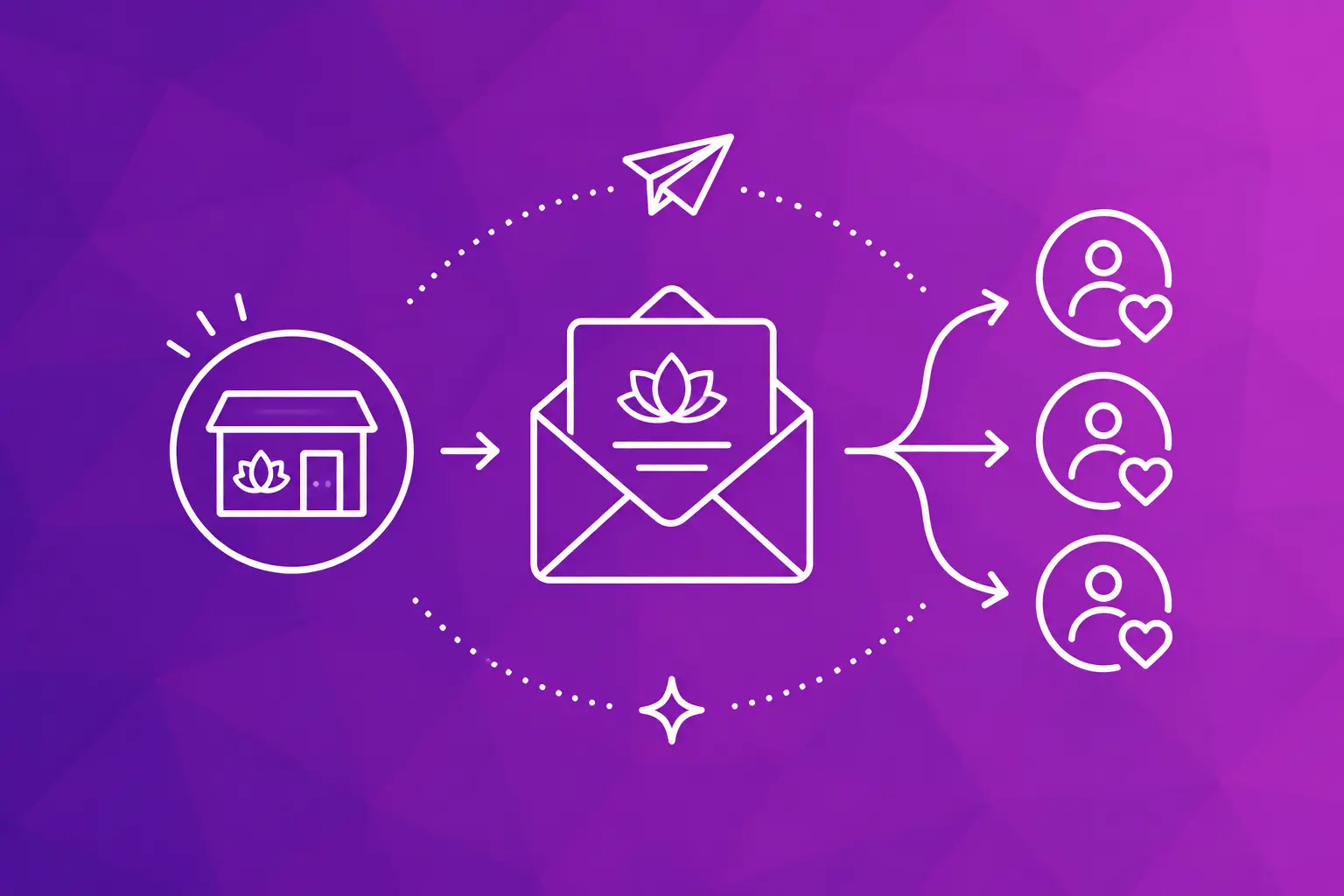
Step 5: Communicate the shift to existing clients. Send a personal email to your regulars explaining the new approach. Frame it around better outcomes, not business changes.
Step 6: Launch with your next qualifying client. The best moment to introduce a treatment plan is during a consultation when you can assess the client's skin and explain why a series delivers better results than one-off visits.
Step 7: Track and iterate. After 90 days, review enrollment numbers, completion rates, and rebooking behavior. Adjust pricing, session count, or marketing based on what the data tells you.
FAQ
Q: Are loyalty programs always a bad idea for spas? A: Not always. Simple programs like "rebook within 6 weeks and receive a complimentary add-on" can work because they encourage timely rebooking without complex tracking. The programs that fail are the ones with complicated points systems, slow reward cycles, and no connection to client outcomes.
Q: What if my clients specifically ask about a loyalty program? A: Clients who ask about loyalty programs are really asking "do you value my repeat business?" You can answer that with a goal-based treatment plan, a rebooking incentive, or exceptional follow-up care. The answer does not have to be points.
Q: How do I explain the difference between a bundle and a treatment plan? A: A bundle is a quantity discount. A treatment plan is a structured plan with a goal, a timeline, and progression from session to session. The simplest way to explain it to clients: "This is not just a package deal. It is a plan designed specifically for your skin, with each session building on the last."
Q: Will I lose clients who were loyal to the old program? A: Some discount-driven clients may leave. That is actually a good thing. Clients who stay are the ones who value your expertise and want results--and those are the clients who build a sustainable business. Run your own numbers: one client enrolled in a $780 plan can outweigh several one-off loyalty-program visits.
Q: How long should a treatment plan last? A: Most effective treatment plans run 4-8 sessions over 6-16 weeks. Short enough to feel achievable, long enough to deliver visible results. Start shorter (4-6 sessions) and offer follow-up treatment plans for clients who want to continue.
Q: Can I still offer occasional perks without a formal loyalty program? A: Absolutely. A surprise upgrade, a birthday add-on, or a thank-you note with a sample are all relationship builders that do not require a formal program. Spontaneous generosity often feels more meaningful than an earned reward.
Loyalty Is Not a Program. It Is an Outcome.
The spas that retain clients long-term are not the ones with the best points system. They are the ones that deliver results, follow up consistently, and make every client feel like they have a plan. Stop trying to incentivize loyalty with discounts. Start earning it with outcomes.
Replace failed loyalty programs with goal-based treatment plans in SpaSphere.