

Treatment Plan
Barrier Repair Treatment Plan
A recovery-focused treatment plan for clients with damaged, sensitized, or over-treated skin – structured to rebuild barrier function before reintroducing active treatments.
Thirty days for $1, then $139 a month with four team members included.
Overview
Barrier damage is one of the most underserved concerns in esthetics. Clients show up with tight, reactive, dehydrated skin – often caused by overusing retinoids, acids, or harsh cleansers at home. Some have been over-treated by previous providers. Their skin is inflamed, their moisture barrier is compromised, and they need a plan that prioritizes healing over results.
The challenge is that these clients are often impatient. They want to jump back to active treatments. A structured barrier repair treatment plan gives you the framework to slow them down, explain the science, and rebuild their skin step by step.
Who this treatment plan is for
Clients with signs of a compromised moisture barrier: chronic redness, tightness, stinging with products, flaking despite oily skin, or sensitivity that appeared after overusing actives. This includes over-exfoliators, retinoid users who escalated too fast, and clients recovering from aggressive professional treatments.
Treatment Plan structure
Phase 1: Strip & Simplify
Remove all actives from homecare. Simplify to a gentle cleanser, barrier-supporting moisturizer, and SPF. In-treatment: calming enzyme mask, no exfoliation, no extractions. LED (red) to reduce inflammation. The goal is to stop the damage before you start repairing.
Phase 2: Repair & Hydrate
Introduce ceramide and fatty acid-rich treatments. Professional hyaluronic acid infusions. Gentle galvanic current to improve product penetration. Begin rebuilding lipid layers. Homecare shifts to include niacinamide and peptide serums.
Phase 3: Rebuild & Strengthen
Barrier function should be measurably improved. Introduce mild stimulation – enzyme peels, light microcurrent. Test tolerance before moving to any exfoliation. Focus on building resilience so the barrier can handle actives again in the future.
Phase 4: Reintroduce & Monitor
Slowly reintroduce one active at a time – typically a low-percentage retinoid or vitamin C. Monitor for reactivity at each session. Adjust based on tolerance. Transition client to a maintenance cadence with quarterly barrier check-ins.
Sample timeline
10-14 weeks for the active repair phase, then quarterly check-ins
Pricing example
Sessions
6 sessions
Treatment Plan Price
$700-$1,100
Example plan value
Six sessions at $145 each comes to $870 for the full plan.
Key benefits
- Gives sensitized clients a plan built around repair before any active treatment
- Suits clients whose skin reacted to over-exfoliation, fast retinoid escalation, or an aggressive home routine
- Creates a strong trust-building relationship because clients see you as the provider who finally helped
- Creates a natural moment to recommend the products her rebuilt routine needs
- Feeds clients into corrective treatment plans (acne, pigmentation, anti-aging) once their barrier is restored
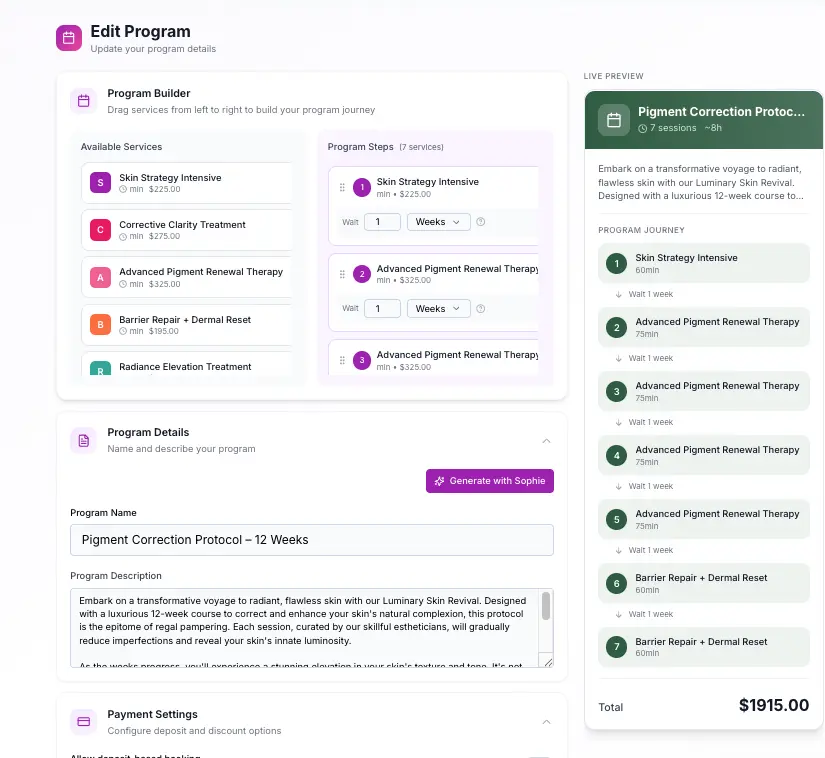
Build this treatment plan in SpaSphere
Build the series once, with the wait between sessions. SpaSphere tracks each step on her profile and emails her when her next session is ready to book.
FAQ
How do I know if a client needs barrier repair before other treatments?
Signs include stinging with basic products, persistent redness, tightness after cleansing, and skin that looks dry and oily at the same time. If a client presents with these symptoms, starting corrective treatments will likely make things worse. The barrier repair treatment plan should come first.
What if a client resists stripping their routine in Phase 1?
This is the most common pushback. The treatment plan structure helps because you can show them the full plan – they are not giving up actives forever, just pausing for 2-3 weeks so their skin can heal. Documentation and phase timelines make this conversation much easier than verbal advice alone.
How long does barrier repair typically take?
It varies by client. Improvement often shows within a few weeks; full restoration, including the ability to tolerate actives again, can take a few months. Clients with severe damage from isotretinoin or aggressive peels may need longer.
Can I run this treatment plan alongside acne or pigmentation treatments?
Not simultaneously. Barrier repair needs to come first. Once the barrier is restored (Phase 4), you can transition the client into a corrective treatment plan. This actually increases lifetime value because barrier repair becomes the gateway to a second treatment plan enrollment.
Related treatment plans
Start my $1 trial
Build the plan, record what you saw at each visit, and give your client a clear path to her next session.
Get started for $1