

Treatment Plan
Hyperpigmentation Treatment Plan
A methodical brightening treatment plan that corrects uneven tone through layered treatments, strict protection protocols, and the kind of consistency that only a structured plan delivers.
Thirty days for $1, then $139 a month with four team members included.
Overview
Hyperpigmentation is one of the most common client complaints – and one of the hardest to treat without a plan. Spot treatments and single peels rarely produce lasting results because pigmentation is driven by inflammation, UV exposure, and melanocyte behavior that takes weeks to shift. A proper pigmentation treatment plan layers assessment, correction, and protection into a sequence that actually moves the needle.
This treatment plan works for post-inflammatory hyperpigmentation (PIH), melasma management, sun damage, and age spots. The key differentiator is the protection phase: clients who skip sunscreen compliance will relapse, and a structured treatment plan gives you the framework to address that directly.
Who this treatment plan is for
Clients with uneven skin tone, dark spots from past breakouts, melasma, or cumulative sun damage. They are often frustrated because over-the-counter brightening products have not delivered visible change. They need professional-grade treatments paired with strict daily protection to see real improvement.
Treatment Plan structure
Phase 1: Skin Assessment & Baseline
Photograph and map pigmentation under Woods lamp. Identify pigment type (epidermal vs. dermal) and triggers. Review current routine for photosensitizing ingredients. Establish sunscreen protocol and baseline homecare.
Phase 2: Active Brightening
Begin progressive brightening peels (lactic, kojic, or azelaic acid based). Introduce professional-grade vitamin C and tyrosinase inhibitors in treatment. Layer LED (red or amber) to calm inflammation that drives further pigment production. Adjust peel strength each visit based on tolerance.
Phase 3: Protection & Stabilization
Shift focus to barrier repair and aggressive sun protection. Use antioxidant infusions and gentle resurfacing to maintain momentum without over-treating. Reinforce SPF compliance and hat/shade habits. This is the phase where DIY approaches often stall – professional accountability keeps clients on track.
Phase 4: Maintenance & Monitoring
Monthly or bi-monthly maintenance with light brightening treatments. Compare progress photos to baseline. Adjust homecare seasonally – heavier brightening in fall/winter, stronger protection in spring/summer. Catch any rebound pigmentation early.
Sample timeline
10-14 weeks for the active treatment plan, then maintenance every 4-6 weeks
Pricing example
Sessions
7 sessions
Treatment Plan Price
$900-$1,500
Example plan value
Seven sessions at $175 each comes to $1,225 for the full plan.
Key benefits
- Turns frustrating one-off brightening treatments into a trackable correction journey with visible milestones
- Builds in SPF compliance checkpoints that reduce pigment relapse and improve outcomes
- Gives your client a defined series instead of single brightening sessions, with each step tracked on her profile
- Differentiates your practice with before/after documentation and structured progress reviews
- Creates a natural seasonal rebooking rhythm tied to UV exposure changes
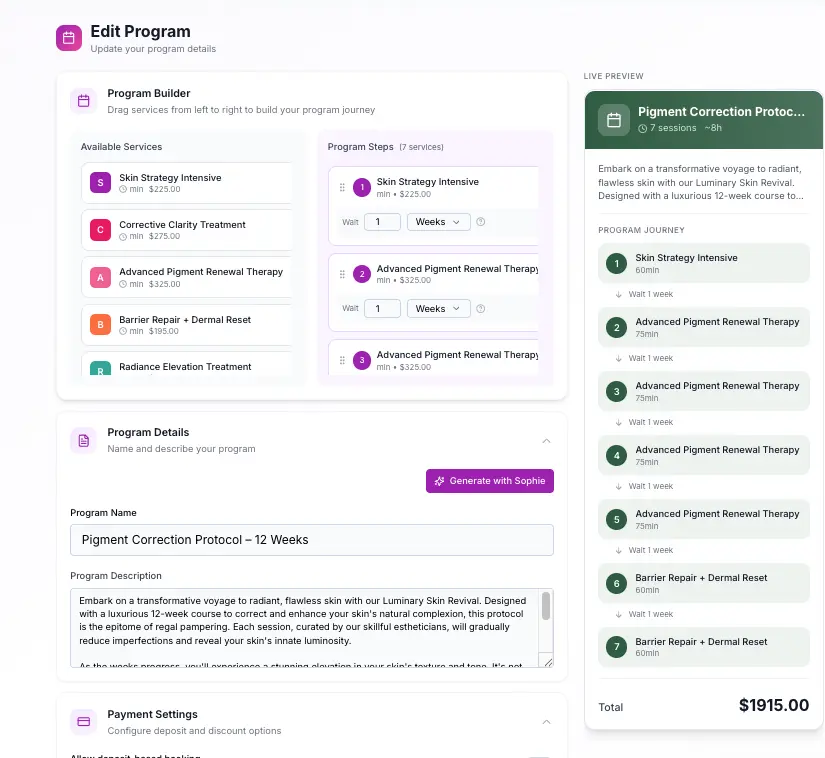
Build this treatment plan in SpaSphere
Build the series once, with the wait between sessions. SpaSphere tracks each step on her profile and emails her when her next session is ready to book.
FAQ
How long before clients see results from a pigmentation treatment plan?
Visible improvement often shows by sessions 3-4 (around week 5-6). Epidermal pigmentation responds faster than dermal. Setting this expectation upfront is exactly why a treatment plan structure matters – it prevents early dropout from clients expecting instant results.
Can this treatment plan work for melasma?
Yes, with modifications. Melasma is hormonally driven and tends to recur, so the maintenance phase is especially important. The treatment plan structure lets you document triggers, track flares, and adjust treatment intensity – which is easier to manage than treating melasma reactively.
What happens if a client does not follow the sunscreen protocol?
This is a common reason pigmentation treatment plans stall. The structured approach lets you check compliance at each visit and document it. If a client is not protecting their skin, you can pause active brightening and focus on education rather than wasting their money on treatments that will be undone by UV exposure.
Should I photograph progress at every session?
Yes. Consistent lighting and angles at each visit build a visual record of how far she has come. In SpaSphere you attach before/after photos to each visit's SOAP note, so they sit on her record next to what you did.
Related treatment plans
Start my $1 trial
Build the plan, record what you saw at each visit, and give your client a clear path to her next session.
Get started for $1