What a Gift Card Actually Is
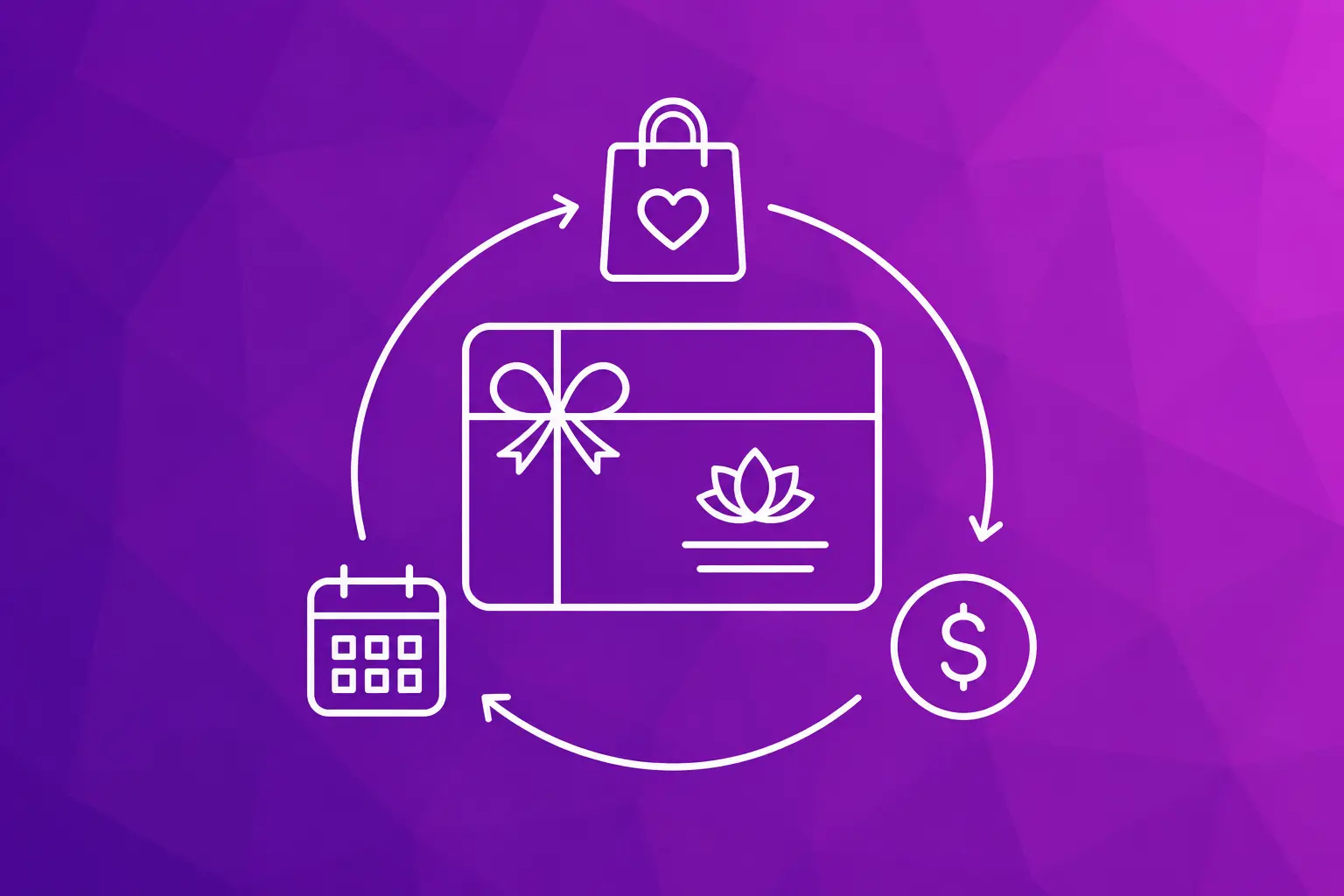
Strip away the ribbon and a gift card is this: an existing client pays you full price, today, to put a brand-new person in your chair. She handles the recommendation, the persuasion, and the payment. You receive cash up front and a warm introduction.
Most solo estheticians treat gift cards as an afterthought, a thing they technically offer if someone asks. Spas that sell them deliberately report gift cards reaching 8 to 15 percent of annual revenue, with December alone accounting for a third of that. The difference isn't demand. People are already searching for "facial gift card near me" every November. The difference is whether you've made them easy to buy and worth redeeming.
Amount Cards vs. Service Cards
Your first design decision: does the card carry a dollar value or a specific treatment?
Service cards win for gifting. "A signature facial with Maya" is a present. "$120 toward services" is a transaction. The giver wants to hand over an experience, and naming the treatment does her storytelling for her. Service cards also protect you from awkward redemption math when your prices go up between purchase and redemption: sell the card for today's price, honor the named service.
Dollar cards win for flexibility, and some buyers genuinely don't know what to pick. Offer both, but lead with two or three named options at fixed prices: your most popular facial, a deluxe version, and one premium package. Three choices, not your whole menu. A confused giver buys nothing.
Price the headline option at your signature service, because that's the treatment you want strangers to meet you through.
The Calendar Does the Marketing
Gift card demand arrives on a schedule. You don't need to invent occasions; you need to show up two weeks before each one:
- December is half your gift card year. Mention cards in your November emails, at checkout, and on your booking site from Thanksgiving on.
- Mother's Day is second. Start the first week of April... err on early; gifters shop ahead.
- Valentine's Day catches partners who fear buying skincare products but trust you to know better.
- Year-round: birthdays, thank-yous, teacher gifts. A small "gift cards available" line in your email footer and at checkout covers these without a campaign.
Sell them where the buyer already is. A card on your checkout counter catches the client who just had a great facial and remembers her sister's birthday. An online option catches the husband shopping at 11pm on December 22nd, and he is not coming in person. If your booking site can't sell a gift card at midnight, you're forfeiting the most motivated buyer of the year.
The 11pm December buyer doesn't comparison shop. He searches, finds an esthetician whose site sells gift cards in two clicks, and buys. Be that site.
The Accounting Part (Two Minutes, Worth It)
A gift card is not revenue when you sell it. It's a liability: you hold the client's money and owe the service. It becomes revenue when redeemed. This matters for two practical reasons.
First, December gift card cash isn't December profit. The work arrives in January and February, which, usefully, is exactly when your calendar thins. Gift cards quietly move December demand into your slow season, which is the best cash-flow feature they have.
Second, some cards never get redeemed. Industry-wide, 10 to 20 percent of gift card value goes unused. Don't build your plans around that money, and check your state's rules: many states restrict expiration dates and fees on gift cards, and several treat long-unredeemed balances as property that escheats to the state. Five minutes on your state's consumer-protection page settles your policy. When in doubt, don't expire them; an honored three-year-old card creates a story your client tells, and an expired one creates a different story.
Track every card: number, amount, purchase date, remaining balance. A spreadsheet works at low volume. Past a card or two a month, let your software carry it; balance disputes are exactly the kind of mental load that makes spa ownership exhausting, and a system that shows the balance ends the conversation before it starts.
The Redemption Visit Is the Whole Game
Here's where most gift card programs leak their value. The recipient books, gets her facial, says thank you, and is never seen again. The card brought in revenue you'd already collected. Nothing was gained.
Treat the redemption visit as an audition, because that's what it is. The recipient is a hand-picked prospect: someone whose friend or partner believed she'd love your work enough to pay for it. She walks in pre-disposed to be delighted. Your job:
- Full consultation, not a transactional service. She's new. Learn her skin the way you would for any new client. The card paid for the treatment; give her the experience your regulars get.
- End with a plan, not a pitch. "Your skin would respond well to this every six weeks. Want me to hold a spot in early August?" The same rebooking conversation you'd have with anyone, made easier by the fact that she just experienced the result.
- Get her on your list. Intake form, consent box, your monthly email. Even if she doesn't rebook today, she's hearing from you in three weeks.
Convert one in three redemptions into a returning client and your gift card program stops being a cash-flow tool and becomes an acquisition engine. The math mirrors a referral program, except the referrer paid you for the privilege.
Start This Month
Whatever the calendar says, the setup is the same afternoon of work: pick two or three giftable services, put them on your booking site and a sign at checkout, write the tracking sheet or switch it on in your software, and add one line to your email footer. Then let November, February, and May do what they do.